
Plasma Fractionation Market to Reach USD 63.06 Billion by 2031, Driven by Rising Demand for Immunoglobulins and Plasma-Derived Therapies
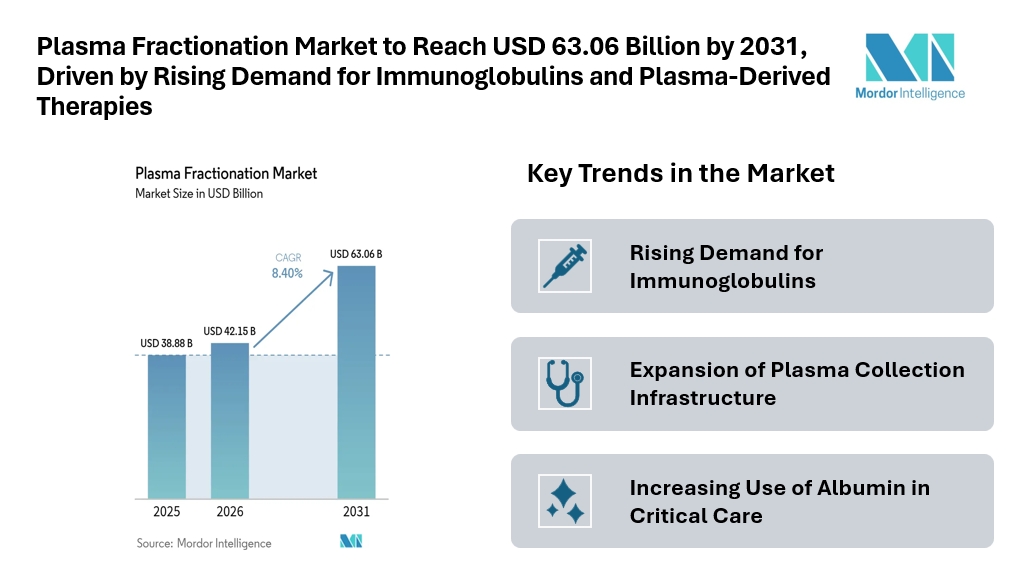
Hyderbad, India – 13 October 2026 – According to Mordor Intelligence, the Plasma Fractionation Market is estimated at USD 42.15 billion in 2026 and is projected to reach USD 63.06 billion by 2031, registering a CAGR of 8.40% during the forecast period. Market growth is supported by rising demand for plasma-derived medicinal products across neurology, immunology, hematology, and critical-care applications. Expanding plasma collection infrastructure and investments in manufacturing capacity are also contributing to the market’s development.
Plasma fractionation involves separating human blood plasma into therapeutic proteins used to manage various medical conditions. Immunoglobulins, coagulation factors, albumin, and protease inhibitors are important product categories serving different treatment needs. Increasing demand for immunoglobulin therapies, wider use of albumin in critical care, and continued investment in plasma collection centers are supporting the plasma fractionation industry.
North America remains the largest regional market, supported by established plasma collection infrastructure and strong demand for plasma-derived therapies. Asia-Pacific is expected to record the fastest growth as countries invest in domestic fractionation facilities and seek to reduce dependence on imported plasma products. However, donor supply constraints, competition from recombinant therapies, and manufacturing challenges remain important considerations for market participants.
Report Overview: https://www.mordorintelligence.com/industry-reports/plasma-fractionation-market?utm_source=abnewswire
Plasma Fractionation Market Trends
Rising Demand for Immunoglobulins
Immunoglobulins represent a key product category in the plasma fractionation market, supported by their use in treating immune-related and neurological conditions. Intravenous immunoglobulin and subcutaneous immunoglobulin therapies serve patients with conditions that require immunoglobulin replacement or immune modulation. Growing awareness, improved diagnosis, and demand for long-term treatment are supporting the use of these products.
The adoption of subcutaneous immunoglobulin is also gaining attention as patients and healthcare providers consider treatment options that support home-based administration. These therapies can reduce reliance on hospital infusion settings for eligible patients, while specialty pharmacies and infusion services play an important role in distribution and patient support.
Expansion of Plasma Collection Infrastructure
Access to source plasma remains essential for manufacturers seeking to maintain production and meet demand for plasma-derived medicinal products. Companies are expanding donation-center networks and investing in collection technologies to improve operational efficiency and strengthen supply reliability.
Emerging markets are also developing domestic plasma collection and fractionation capabilities. These investments are intended to improve local access to essential therapies and reduce dependence on imports. However, differences in donor policies, collection capacity, and healthcare infrastructure continue to influence the availability of plasma across regions.
Increasing Use of Albumin in Critical Care
Albumin is an important plasma-derived product used in critical-care management, including selected fluid-resuscitation and perioperative settings. Demand is supported by its role in hospital treatment protocols and the expansion of healthcare services in emerging markets.
As healthcare infrastructure develops across Asia-Pacific, hospitals are adopting treatment practices that support demand for albumin and other plasma-derived products. Domestic manufacturing initiatives may also help improve regional supply and reduce dependence on imported products.
Growth in Manufacturing Capacity and Processing Technologies
Plasma fractionation companies are investing in production facilities, process improvements, and technologies that support higher manufacturing yields. Efficient processing and virus-removal systems are important for maintaining product quality and managing the complexity of plasma-derived medicinal products.
Vertical integration is another feature of the competitive landscape. Companies with established collection networks and manufacturing operations can coordinate raw-material supply with downstream production requirements. At the same time, high batch-failure rates and supply disruptions can increase operating pressure, making manufacturing efficiency and quality management important priorities.
Plasma Fractionation Market Segmentation
The plasma fractionation market is segmented by product, application, end user, sector, and geography.
-
By Product
-
Immunoglobulins
-
Intravenous Immunoglobulin (IVIG)
-
Subcutaneous Immunoglobulin (SCIG)
-
Other Immunoglobulins
-
Coagulation Factors
-
Albumin
-
Protease Inhibitors, including C1-Esterase and Alpha-1 Antitrypsin
-
Other Plasma-Derived Products
-
By Application
-
Neurology
-
Immunology
-
Hematology
-
Pulmonology
-
Critical Care and Trauma
-
Other Applications
-
By End User
-
Hospitals and Clinics
-
Ambulatory Surgical Centers
-
Plasma Collection Centers and Blood Banks
-
Other End Users
-
By Sector
-
Private Fractionators
-
Public Fractionators
-
By Geography
-
North America: United States, Canada, and Mexico
-
Europe: Germany, United Kingdom, France, Italy, Spain, and Rest of Europe
-
Asia-Pacific: China, Japan, India, Australia, South Korea, and Rest of Asia-Pacific
-
Middle East and Africa: GCC, South Africa, and Rest of Middle East and Africa
-
South America: Brazil, Argentina, and Rest of South America
Plasma Fractionation Market Competitive Landscape
The plasma fractionation industry is moderately concentrated, with leading companies maintaining established collection networks, manufacturing infrastructure, and broad portfolios of plasma-derived therapies. Competition is shaped by the ability to secure source plasma, maintain consistent product quality, improve processing efficiency, and meet regulatory requirements.
Major participants are investing in production capacity and technologies that support manufacturing efficiency and supply security. Companies are also responding to regional demand through facility expansions, partnerships, and investments in local production. At the same time, competition from long-acting recombinant coagulation factors and other treatment options creates pressure in selected product categories.
Key Players
The major companies operating in the plasma fractionation market include:
-
CSL Behring
-
Grifols
-
Takeda Pharmaceuticals
-
Octapharma
-
Kedrion Biopharma
-
Biotest
-
Bio Products Laboratory
-
Shanghai RAAS Blood Products Co., Ltd.
-
Sanquin Blood Supply Foundation
-
LFB S.A.
-
ADMA Biologics
-
Kamada Ltd.
-
Baxter
-
Intas Biopharmaceuticals Ltd.
-
PlasmaGen BioSciences
-
Emergent BioSolutions
-
BioLife Plasma Services
For more insights on the Japanese market report, please visit the Mordor Intelligence page: https://www.mordorintelligence.com/ja/industry-reports/plasma-fractionation-market?utm_source=abnewswire
Conclusion
The plasma fractionation market is expected to grow as demand for immunoglobulins, albumin, coagulation factors, and other plasma-derived therapies increases. Investments in plasma collection networks, manufacturing capacity, and processing technologies are helping companies respond to clinical demand and address supply challenges.
North America remains the leading regional market, while Asia-Pacific offers significant growth opportunities through domestic manufacturing investments and expanding healthcare infrastructure. Companies that strengthen plasma sourcing, maintain manufacturing quality, and improve operational efficiency will be well positioned to compete in the global plasma fractionation industry.
About Mordor Intelligence
Mordor Intelligence is a global market intelligence firm, founded in 2014, helping businesses make informed decisions through data-driven insights, industry expertise, and advanced analytics. With 550+ domain experts and on-ground specialists across 150+ countries, the company delivers comprehensive intelligence across aerospace & defense, agriculture, automation, automotive, chemicals & materials, consumer goods & services, electronics, energy & power, financial services, food & beverages, healthcare, hospitality & tourism, information & communications technology, and logistics.
Its offerings include syndicated industry reports and subscription platforms such as Synapse. Mordor Intelligence is ISO 9001:2015 and ISO/IEC 27001:2022 certified, a member of ESOMAR and the Market Research Society of India, and a four-time Great Place to Work® honoree. Learn more at mordorintelligence.com.
Media Contact
Company Name: Mordor Intelligence Private Limited
Contact Person: Jignesh Thakkar
Email: Send Email
Phone: +1 617-765-2493
Address:11th Floor, Rajapushpa Summit, Nanakramguda Rd, Financial District, Gachibowli
City: Hyderabad
State: Telangana 500008
Country: India
Website: https://www.mordorintelligence.com/


